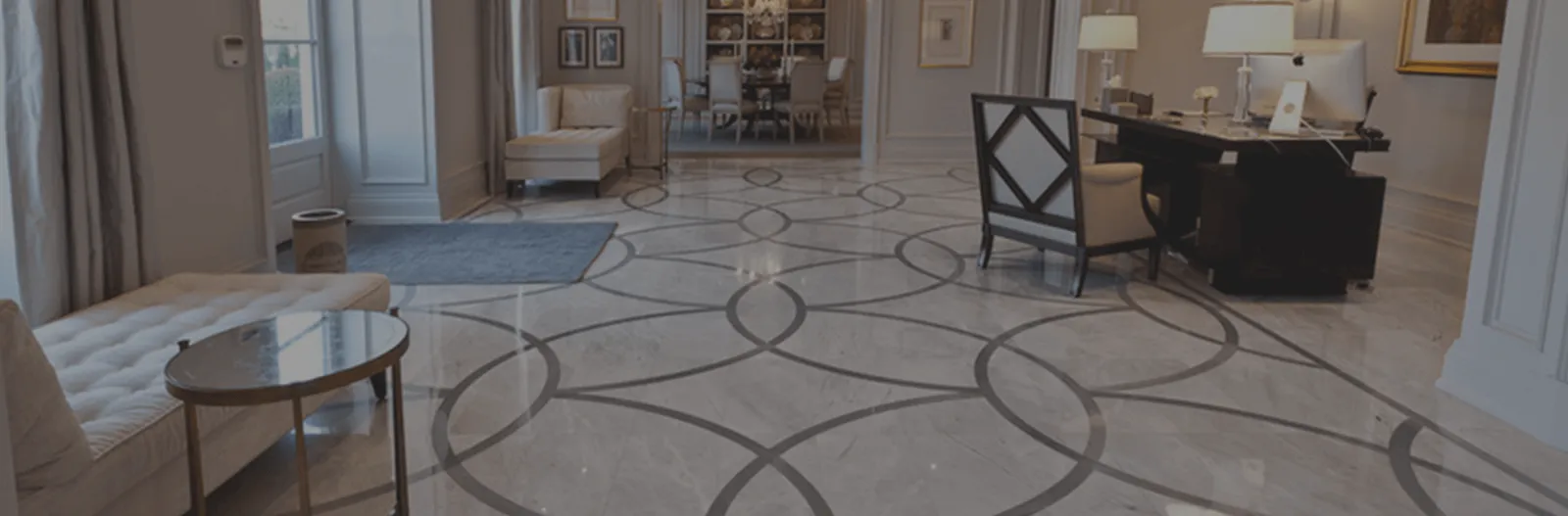
The short answer: seal it, sweep it, clean it with a pH-neutral cleaner, and keep acids like vinegar and lemon off marble. Squeegee your stone shower after every use. When it gets dull, scratched or etched, call a stone restoration pro instead of scrubbing harder.
Natural stone is the most beautiful thing I set. It's also the one people most often damage by accident, usually with a "natural" cleaner they read about online. Here's how to look after it, in plain English.
What natural stone is
Natural stone is cut from the earth, not made in a factory. No two pieces are the same. The stones I see most in bathrooms are:
- Marble. Limestone that heat and pressure changed over millions of years. It's made of calcium carbonate, which is why acids damage it.1
- Limestone and travertine. Also calcium-based, so they're acid-sensitive like marble. Travertine has natural holes that are usually filled.
- Granite. Much harder and resists household acids. It can still stain and should still be treated gently.
Porcelain that looks like marble is a different story. It doesn't etch and doesn't need sealing. (Porcelain vs Ceramic Tile)
| Stone | Etches from acids? | Needs sealing? |
|---|---|---|
| Marble | Yes | Yes |
| Limestone | Yes | Yes |
| Travertine | Yes | Yes |
| Granite | Generally no | Often helpful; ask your supplier |
Seal it, and keep it sealed
A stone sealer is a penetrating (impregnating) sealer. It soaks in and helps the stone resist water and stains. It doesn't change the look.
- Sealer slows stains. It doesn't stop etching or scratches. Both the Natural Stone Institute and our local stone pro say this.2
- No topical coatings. Shiny "coat-on" finishes can trap moisture and cause problems. Stick with a penetrating sealer.3
- How often: RedHill Stone Care recommends resealing marble about every 2 to 5 years, and more often in wet areas like showers.1 Follow the sealer maker's directions too.
Everyday cleaning
- Dry first. Sweep, vacuum with a soft brush, or wipe with a dry microfibre cloth. Grit underfoot slowly dulls the polish.3
- Wash with a pH-neutral cleaner. A stone cleaner, or plain water with 2 or 3 drops of mild, fragrance-free dish soap in a few litres of water. Too much soap leaves a slippery film.1
- Rinse, then dry with a soft cotton or microfibre cloth so you don't get streaks.
- Wipe up spills right away. Blot, don't spread. The longer an acid sits, the deeper the damage.2
Our stone pro suggests a wet cleaning about once or twice a month on floors, with dry dusting in between.3
Etch or stain? How to tell
Etch
A dull, lighter spot or ring. Acid ate into the surface. It won't clean off. A stone pro hones and polishes it out.
Stain
A darker mark. Something soaked into the stone, like oil, wine or water. Sealing helps prevent it.
RedHill Stone Care's quick rule: etch marks lighten the stone, stains darken it.3
What to keep off your stone
- Acids: vinegar, lemon and citrus, wine, and "natural" vinegar cleaners.
- Harsh household cleaners: descalers, oven cleaner, rust removers, toilet bowl cleaner, bleach, glass cleaner, and most store-bought grout cleaners.1,3
- Scrubbers: scouring pads, abrasive powders and "magic" erasers.3
- Dragging heavy things. Use a dolly for the fridge, and felt pads under furniture.
If a bottle doesn't say it's safe for marble or natural stone, don't use it on marble.
Stone in the shower
- Squeegee the walls, floor and bench after every shower.2,3
- Keep shampoo and soap bottles off the stone, or on a tray. Some products are acidic.
- For soap scum, use a non-acidic soap scum remover made for stone.2
- Watch your silicone and grout, and book your five-year check-up. (Our warranty)
Most of the marble damage I see isn't from age. It's from a bottle under the sink. Put the vinegar away, buy a pH-neutral stone cleaner and a squeegee, and your marble will look like the day I set it.
When to call a stone pro
Call a stone restoration specialist when your stone is dull, scratched, etched or stained, or when it's time to reseal. Restoring is far cheaper and faster than replacing stone.4
The pro I trust is RedHill Stone Care. They work on marble, granite, limestone, travertine, slate, onyx, terrazzo and quartzite, and their service area includes Halton.5 Here's how they describe restoration:
- They sand the stone wet with diamond pads to remove scratches, etch marks and light staining, then go finer and finer until the shine comes back.6
- A typical restoration removes only about 0.1 mm of stone, about the thickness of a sheet of paper.6
- They can finish it polished (high shine) or honed (soft matte), or switch from one to the other.5
- Polishing alone just makes scratches shiny. The damage has to come out first.4
How often? For homes, they say it's typically every one to five years. Counters are often done every two to three years and floors every three to five, depending on use.4
Reach them at 647-643-7779 or info@redhillstonecare.ca.
Stone care and your warranty
Every Burlington Tile job comes with a 25-year warranty on tile-setting workmanship. On marble and natural stone projects, proper stone care (sealing and cleaning as recommended) is needed to keep that warranty valid, along with the five-year silicone and grout check. Read the full warranty.
Natural Stone Care Checklist
Every day
- Squeegee the shower walls, floor and bench
- Wipe up spills right away (blot, don't spread)
Every week
- Dry dust: sweep, soft-brush vacuum or dry microfibre
- Wash with a pH-neutral stone cleaner, rinse and dry
Every year
- Water test: drip water on the stone. If it darkens within a few minutes, it's time to reseal
- Look for dull spots, cracked grout or tired silicone
Every 2 to 5 years
- Reseal with a penetrating sealer (sooner in the shower)
Every 5 years
- Book your Burlington Tile silicone and grout check: 289-337-1578
Never
- Vinegar, lemon, bleach, descaler or harsh cleaners
- Scouring pads or magic erasers
Frequently asked questions
Does marble need to be sealed?
Yes. A penetrating (impregnating) sealer helps marble resist stains and moisture. It does not stop etching or scratches. Our local stone pro recommends resealing about every 2 to 5 years, and more often in wet areas like showers.
Can I clean marble with vinegar?
No. Vinegar is an acid and will etch marble, limestone, travertine and onyx. Use a pH-neutral stone cleaner, or plain water with a few drops of mild, fragrance-free dish soap.
What is the difference between an etch and a stain?
An etch is acid damage to the surface. It looks lighter and dull, and you cannot wash it off. A stain is something soaked into the stone. It usually looks darker. Etches need a stone pro to hone and polish them out.
Does granite etch?
True granite resists household acids, so it won't etch from lemon juice the way marble does. It can still stain, and some stone sold as granite contains acid-sensitive minerals, so treat it gently.
How often should natural stone be professionally restored?
It depends on use. For homes, our stone pro says it's usually every one to five years. Counters are often done every two to three years and floors every three to five.
Does stone care affect my warranty?
Yes. On marble and natural stone projects, proper stone care (sealing and cleaning as recommended) is needed to keep our 25-year warranty on tile-setting workmanship valid.
Talk to Mike
Thinking about marble or natural stone for your Burlington, Oakville or Halton bathroom? I'll tell you honestly where it works and what it takes to care for it. Call Mike at 289-337-1578 or book a consult. Every job comes with a 25-year warranty on tile-setting workmanship.
Sources
- RedHill Stone Care, What is Marble?: redhillstonecare.ca/information/what-is-marble/
- Natural Stone Institute, Care & Cleaning of Natural Stone: naturalstoneinstitute.org/consumers/care/
- RedHill Stone Care, Info (damage types, do's and don'ts): redhillstonecare.ca/information/
- RedHill Stone Care, FAQ: redhillstonecare.ca/faq/
- RedHill Stone Care, home page: redhillstonecare.ca
- RedHill Stone Care, Marble Polishing: redhillstonecare.ca/information/marble-polishing/
- LATICRETE Surface Care Resource Guide: laticrete.com