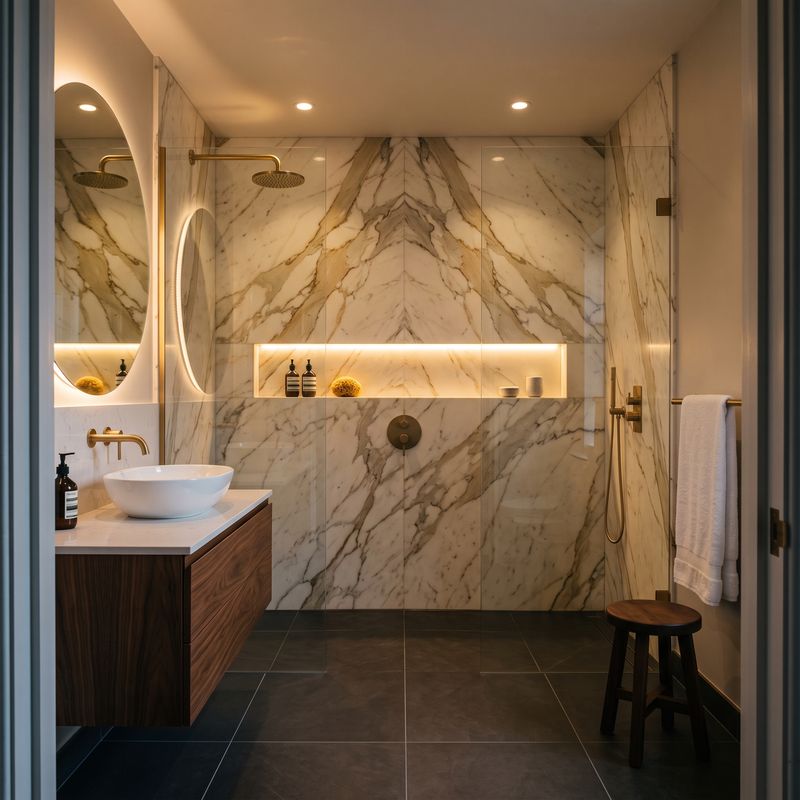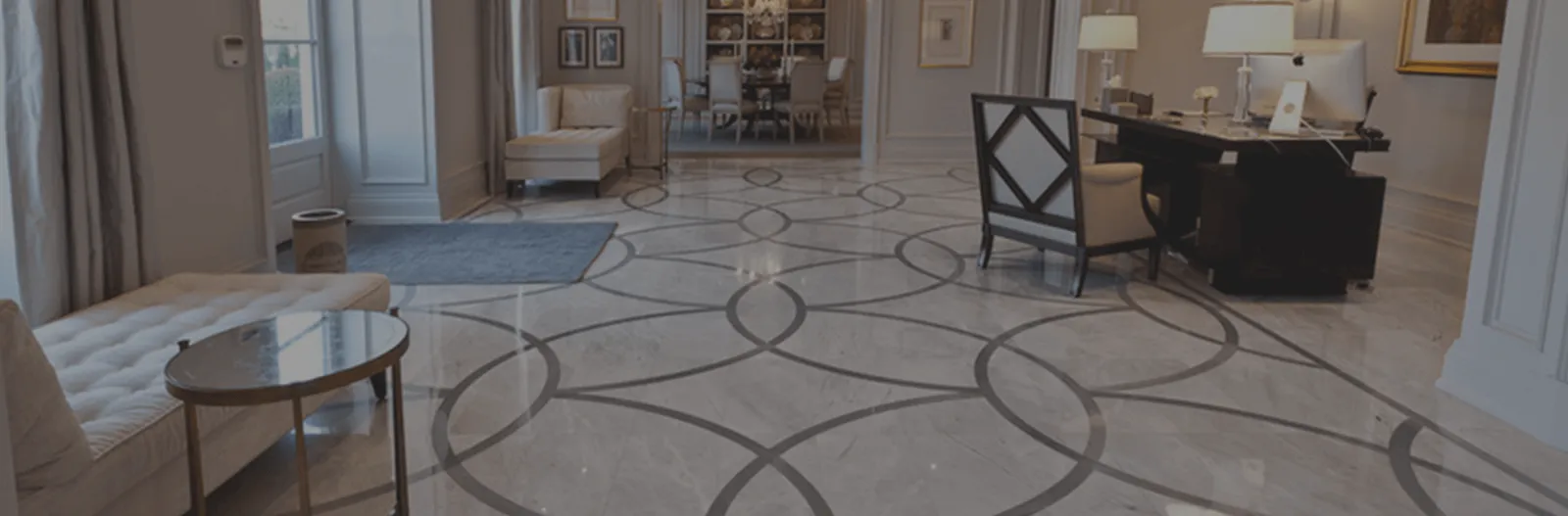

The short answer: porcelain is a type of ceramic tile that’s denser and absorbs much less water. Under the ANSI A137.1 standard, porcelain tile has a water absorption of 0.5% or less. That makes porcelain the better pick for floors, showers, entryways and anywhere it gets wet or cold. Regular ceramic is softer, easier to cut and great on walls and backsplashes. Neither is “cheap tile.” They’re just suited to different jobs.
I get asked this one all the time in Burlington and Oakville showrooms and kitchens. Here’s the plain-English version.
What’s the actual difference?
Both are made from clay and fired in a kiln. The difference is in the recipe and the heat:
- Porcelain uses finer, more refined clay and is fired hotter. The result is a dense, hard body that soaks up very little water.
- Ceramic (often called “non-porcelain ceramic”) is fired at lower temperatures, so it’s a bit more porous and softer.
That one difference, density and water absorption, drives almost everything else.
Side-by-side comparison
| Porcelain | Ceramic | |
|---|---|---|
| Water absorption | Very low (0.5% or less under ANSI A137.1) | Higher |
| Hardness | Harder, more chip-resistant | Softer, easier to cut |
| Best for | Floors, showers, entryways, heated floors, large-format, slabs | Walls, backsplashes, low-traffic areas |
| Shower floors | Yes | Not my choice |
| Outdoors in Ontario | Some products are rated for it; check the maker | No |
| Sizes | Up to huge panels and slabs | Mostly smaller formats |
| Cutting and drilling | Harder, needs the right blades | Easier |
Where I use porcelain
- Shower floors and walls. Low absorption plus strength. Pair it with a proper waterproofing system (in my showers that’s a Laticrete Hydro Ban membrane over a custom-sloped cement mortar bed, with no traditional liner pan). (How to Choose Tile for a Shower)
- Bathroom and kitchen floors. Handles traffic, dropped pans and wet feet.
- Entryways and mudrooms. Ontario winters mean salt, slush and grit tracked in for months.
- Over heated floors. (Heated Bathroom Floors)
- Large-format and slabs. Big panels are almost always porcelain. (What Is Large-Format Tile?)
- Stone looks. Most marble-look tile today is porcelain, and it doesn’t etch like real marble.
Where ceramic still shines
- Backsplashes: endless colours, glazes and handmade looks.
- Shower and bathroom walls: a glazed ceramic wall tile is perfectly at home there over proper waterproofing.
- Feature walls and fireplaces (check the maker’s heat guidance near the firebox).
- Budget-friendly, low-traffic areas.
Ceramic glazes can do things porcelain often doesn’t: deep glossy colours, crackle finishes, zellige-style looks. For a kitchen wall or a powder room, ceramic can be the star.
Glazed vs through-body porcelain
Porcelain comes in two main types:
- Glazed porcelain: the colour and pattern are in a glaze on top. That’s how you get realistic marble and wood looks. A deep chip shows the body colour underneath.
- Through-body (or colour-body) porcelain: the colour runs through the tile (or close to it), so chips are less noticeable. Great for high-traffic floors.
Mitred edges on glazed porcelain hide the body colour at corners, which is why I mitre so many niches and benches.
People sometimes think ceramic is the “cheap” option and porcelain is the “good” one. That’s not how I think about it. I think about where water and feet go. A gorgeous glossy ceramic on a backsplash is a perfect choice. The same tile on a shower floor is a slip-and-slide that soaks up water. Put each tile where it’s strong. Then set it right: Laticrete thinset, full coverage, no dots. Even the best porcelain in the world fails if a cookie monster sets it.
How to tell porcelain from ceramic in the store
- Read the box or spec sheet. Look for “porcelain” and the water absorption figure, or a certification mark from the Porcelain Tile Certification Agency (PTCA) on some products.
- Look at the back and edges. Porcelain is usually denser and finer-grained; ceramic often shows a reddish or lighter, chalkier body.
- Weight. Porcelain is generally heavier for the same size.
- Ask about use ratings: wall only, floor, wet areas, outdoor.
What about slip resistance and wear?
Two more numbers matter on floors, whichever you choose:
- DCOF (slip resistance): ANSI A137.1 lists a minimum wet DCOF of 0.42 for level interior floors walked on when wet. Shower floors deserve extra grip: textured finishes or small tiles with more grout lines.
- Wear rating (often PEI): how well the glaze stands up to foot traffic. Higher is tougher. Wall-only tile isn’t meant for floors.
Setting porcelain is different
Because porcelain absorbs so little water, mortar can’t “grab” it the way it grabs a porous tile. It needs a polymer-modified thinset suited to porcelain (I use Laticrete thinsets, per Laticrete’s current installation instructions) and full coverage. Mastic, a premixed adhesive, has no place under porcelain in a shower. (Pancake Pros & Cookie Monsters)
Frequently asked questions
Is porcelain better than ceramic?
For floors, showers, entryways and anywhere wet, cold or high-traffic, porcelain is usually the better choice. For walls and backsplashes, ceramic is often just as good and offers more glaze options.
Can I use ceramic tile in a shower?
On the walls, yes, over a proper waterproofing system. On the shower floor, I recommend porcelain or a mosaic rated for wet floors because of grip and durability.
Is porcelain tile waterproof?
Porcelain absorbs very little water, but tile isn’t a waterproofing system. Water gets through grout and joints. The waterproofing is the membrane behind the tile.
Is porcelain harder to install?
It’s harder to cut and drill, and it needs the right thinset and full coverage because it’s so dense. Large porcelain also needs very flat floors. A good installer handles all of that routinely.
Can porcelain tile go outside in Ontario?
Some porcelain is rated for exterior and freeze-thaw use. Check the maker’s rating, and know that the installation method matters as much as the tile in our climate.
Talk to Mike
Trying to pick between porcelain and ceramic for your Burlington, Oakville or Halton project? Bring your samples and I’ll tell you honestly where each will work. Call Mike at 289-337-1578 or book a consult. See finished work on Bathroom Renovations, or try a look on your own space with the Bathroom Reno Visualizer. Every job comes with a 25-year warranty on tile-setting workmanship.
Sources
- ANSI A137.1 (porcelain definition, DCOF): via TCNA tcnatile.com/
- Porcelain Tile Certification Agency: porcelaintile.org/ (not fetched; verify before linking)
- Laticrete thinset installation instructions